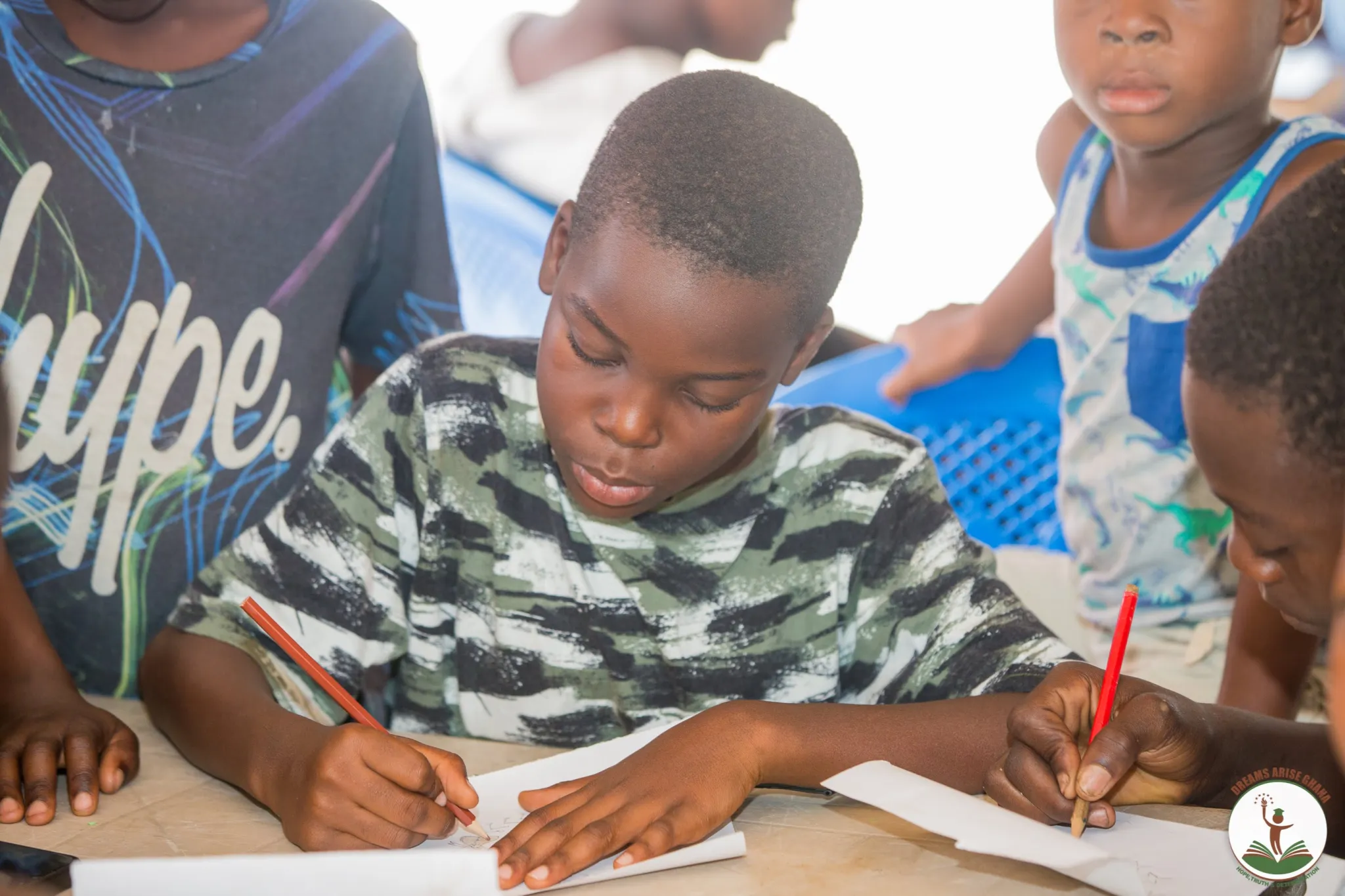
For many years, the reality of rural education in Ghana has been defined by gaps — shortages in learning materials, trained teachers, and mentorship opportunities. While the country has made commendable progress in expanding access to education, rural communities have continued to bear the weight of uneven resource distribution.
According to Ghana’s Education Sector Report 2022, the challenge is not necessarily an overall shortage of teachers, but a distribution imbalance. The report highlights an over-concentration of teachers in metropolitan areas, leaving thousands of public primary school classrooms in rural Ghana without teachers — contributing to an estimated 30 daily dropouts. Access to high-quality educational supplies, including textbooks, is also particularly problematic for students and instructors in rural areas.
It is against this backdrop that the Government of Ghana’s recent commitment to provide a 20% salary incentive and complimentary housing for teachers who accept rural postings stands out as a bold and necessary intervention. Announced by Deputy Minister for Education, Dr. Clement Apaak (March 2026), this policy signals a strong recognition that equitable education requires intentional redistribution of human capital.

Incentivising rural postings is more than a welfare decision for teachers — it is an investment in Ghana’s future. When qualified educators are equitably distributed across the country, rural children gain access not only to instruction, but to guidance, mentorship, and stability. Over time, this can improve retention, learning outcomes, and confidence among rural learners.
If implemented effectively and supported with continuous monitoring, improved infrastructure, and learning resources, this initiative could mark a turning point in narrowing Ghana’s rural–urban education gap.
Education equity is not achieved by access alone — it is strengthened by fairness in opportunity. This move by government demonstrates an important step toward that fairness.
,%20this%20policy%20signals%20a%20strong%20recognition%20that%20equitable%20education%20requires%20intentional%20redistribution%20of%20human%20capital./pfigure%20class=wp-block-image%20size-largeimg%20class=wp-image-515%20src=https://dreamsariseghana.wordpress.com/wp-content/uploads/2026/03/fb_img_1673648179586-1.jpg?w=720%20sizes=(max-width:%20720px)%20100vw,%20720px%20srcset=https://dreamsariseghana.wordpress.com/wp-content/uploads/2026/03/fb_img_1673648179586-1.jpg%20720w,%20https://dreamsariseghana.wordpress.com/wp-content/uploads/2026/03/fb_img_1673648179586-1.jpg?w=150%20150w,%20https://dreamsariseghana.wordpress.com/wp-content/uploads/2026/03/fb_img_1673648179586-1.jpg?w=300%20300w%20alt=%20width=720%20height=405%20data-attachment-id=515%20data-permalink=https://dreamsariseghana.wordpress.com/2026/03/03/a-timely-step-toward-strengthening-rural-education-in-ghana/fb_img_1673648179586-2/%20data-orig-file=https://dreamsariseghana.wordpress.com/wp-content/uploads/2026/03/fb_img_1673648179586-1.jpg%20data-orig-size=720,405%20data-comments-opened=1%20data-image-meta="aperture":"0","credit":"","camera":"","caption":"","created_timestamp":"0","copyright":"","focal_length":"0","iso":"0","shutter_speed":"0","title":"","orientation":"0"%20data-image-title=FB_IMG_1673648179586%20data-image-description=%20data-image-caption=%20data-large-file=https://dreamsariseghana.wordpress.com/wp-content/uploads/2026/03/fb_img_1673648179586-1.jpg?w=720%20//figurep%20class=wp-block-paragraphIncentivising%20rural%20postings%20is%20more%20than%20a%20welfare%20decision%20for%20teachers%20—%20it%20is%20an%20investment%20in%20Ghana’s%20future.%20When%20qualified%20educators%20are%20equitably%20distributed%20across%20the%20country,%20rural%20children%20gain%20access%20not%20only%20to%20instruction,%20but%20to%20guidance,%20mentorship,%20and%20stability.%20Over%20time,%20this%20can%20improve%20retention,%20learning%20outcomes,%20and%20confidence%20among%20rural%20learners./pp%20class=wp-block-paragraphIf%20implemented%20effectively%20and%20supported%20with%20continuous%20monitoring,%20improved%20infrastructure,%20and%20learning%20resources,%20this%20initiative%20could%20mark%20a%20turning%20point%20in%20narrowing%20Ghana’s%20rural–urban%20education%20gap./pp%20class=wp-block-paragraphEducation%20equity%20is%20not%20achieved%20by%20access%20alone%20—%20it%20is%20strengthened%20by%20fairness%20in%20opportunity.%20This%20move%20by%20government%20demonstrates%20an%20important%20step%20toward%20that%20fairness./p)